

A storm, a kitchen fire, or a burst pipe can make a home unlivable in an afternoon. When that happens in Florida, many homeowner and renter policies include coverage that helps pay for somewhere else to live while the house is repaired. It usually shows up on the policy as Additional Living Expense, often shortened to ALE, or as Loss of Use. People rarely read that section until the day they need it.
This is a plain walk-through of how insurance displacement housing tends to work, what the coverage generally pays for, and why a furnished monthly home can be a good fit. It is general information, not insurance advice. Your own policy language and your adjuster have the final say, so confirm the specifics with your insurer before you commit to anything.
What ALE and Loss of Use coverage generally do
ALE is meant to cover the extra costs of living away from home while it is being repaired or rebuilt. The key word is extra. The idea is to keep you at roughly the standard of living you had before the loss, without you coming out ahead or behind.
What that usually includes:
- Temporary housing, such as a rented home, an apartment, or a hotel
- The difference in food costs if you can no longer cook the way you did at home
- Added costs like laundry, pet boarding, or a longer commute to work
- Storage for furniture and belongings while the home is worked on
Coverage is not unlimited. Many policies cap ALE at a percentage of your dwelling coverage, a set dollar amount, or a length of time. Some measure it by how long repairs reasonably take. Read your declarations page or ask your adjuster where your limits sit, because that number shapes every housing choice that follows.
Why a furnished home can work better than a hotel
A hotel room is easy to book on day one, and for a short displacement it can be all you need. When repairs stretch into weeks or months, a single room starts to wear on a household. There is no kitchen, no laundry, and little space for kids, pets, or working from home.
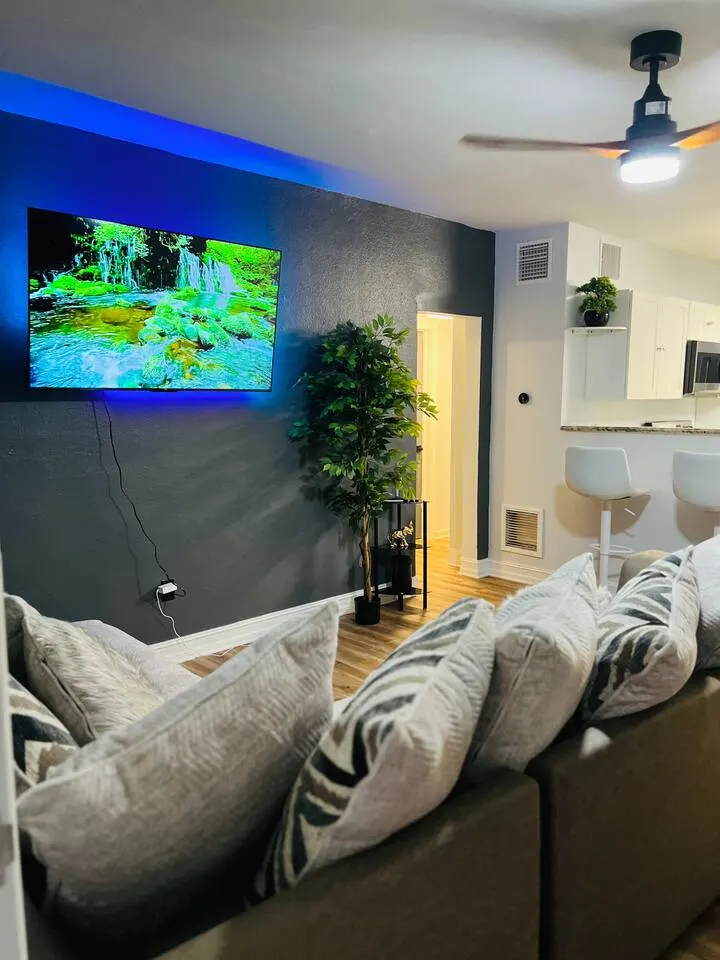
A furnished, whole home rented by the month tends to fit a longer displacement more comfortably. You get a full kitchen, separate bedrooms, and room to keep some normal routine while the repair drags on. These are modest, practical homes with the basics already in place, so you can move in with suitcases instead of a moving truck.
Cost matters too. A comparable furnished home is often priced more reasonably than a hotel over a full month, which helps your ALE dollars stretch further. Adjusters generally look for housing that is reasonable and comparable to what you lost, and a right-sized home usually reads that way.
What an adjuster usually asks for
Documentation is what turns a housing expense into a reimbursed one. A few habits that tend to help:
- Keep every receipt, including rent, deposits, and any added living costs
- Get the housing arrangement in writing, with the monthly rate and dates clear
- Ask your adjuster to approve the housing plan before you sign, when time allows
- Save notes on the damage and the expected repair timeline
- Track the everyday extras, since small costs add up over a long stay
Many providers of monthly furnished homes are used to insurance stays and can send a clean invoice or a simple statement your adjuster can file. Ask for paperwork that lists the address, the monthly rate, and the term.
Keeping a stay flexible when repairs run long
Repair timelines in Florida slip often, especially after a widespread storm when contractors and materials are stretched thin. A stay that looked like six weeks can turn into three months. That is why flexibility is worth asking about up front.
A few things to look for:
- Month-to-month terms, or the ability to extend without a penalty
- A clear process for ending the stay early once your home is ready
- A landlord or manager who has handled displacement stays and understands the paperwork
It also helps to keep your insurer updated as the timeline moves. If repairs run past what your policy allows, you want to know early, not on the last covered day.
Being pushed out of your home is stressful enough without fighting the housing piece too. Knowing roughly how ALE works, keeping good records, and choosing a comfortable place for a long stay can take some weight off. If you are handling a displacement in the Orlando area and want to see what furnished monthly homes are open, reach out to us to check availability. And confirm your coverage details with your own insurer, since your policy and adjuster set the real limits.
The homes set up for a displacement stay
A repair claim rarely comes with a household size that matches a single floor plan. Some families are a couple and a dog waiting on a new roof. Others are three generations who all need to stay under one address while a kitchen fire gets rebuilt. Because our thirteen homes run from two bedrooms up to six, the range usually has a fit.
 Northwest Orlando
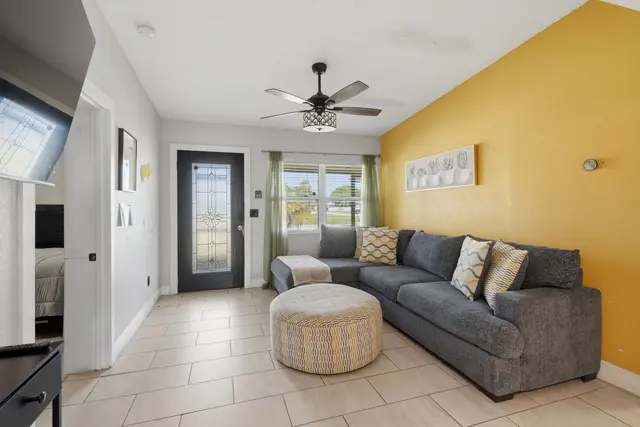
The Clue House
11 min downtown · 12 min ORMC · 14 min Universal
 West Orlando
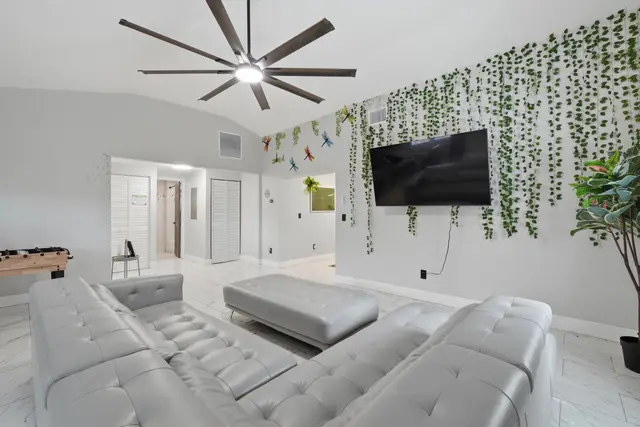
Piedmont
11 min downtown · 11 min ORMC · 13 min Universal
 Northwest Orlando
WinterPark Home
13 min downtown · 10 min AdventHealth · 26 min Universal
The Head Avenue House in Pine Hills has six bedrooms and three bathrooms and sleeps up to fifteen, the option we point toward when a repair puts more than one household under the same roof for a while. It also has full-size laundry in the house and a desk, useful if someone is still working from home during the move. The Piedmont House in Washington Shores has four bedrooms, three bathrooms, and a concrete parking pad that fits several vehicles, which matters when a displacement means keeping more than one vehicle at the house at a time. The Katherine House in Lockhart is smaller: three bedrooms, one bathroom, a screened porch and a private driveway, sized for a couple or a small family who would rather pay for a house that matches the household than for rooms they will not use.
Six more of our homes carry the same tag for insurance and displacement stays: the Amelia House, the Dollins House, the 25th Street House, the Entertainment House, the Londonderry House and the Cozy House. Between the nine of them you get bedroom counts from three to six, bathrooms from one to three, and neighborhoods across the west side, the northwest side and the downtown edge of Orlando, so wherever your own house sits, one of ours is usually within a reasonable drive of it.
Keeping an extended family under one roof
An insurance displacement sometimes moves more people than the household that used to live in the house. Grandparents move in for the duration, a sibling's family joins for a stretch, or three roommates from a damaged unit all need to stay together rather than split across two separate leases. Sleeping capacity, not just bedroom count, is the number worth checking first, and it is listed on every home page next to the bedroom and bathroom counts.
The Head Avenue House sleeps up to fifteen across six bedrooms, the largest option in the portfolio. The Piedmont House sleeps up to fourteen across four bedrooms, and the Dollins House sleeps up to thirteen across four bedrooms on a shaded lot of mature oaks. All three come under one written agreement and one monthly rate, which keeps a large household on a single claim line instead of two separate housing costs for an adjuster to reconcile. Piedmont and Game Day Getaway-Downtown Orlando are both in Washington Shores, so a household that needs two houses can still keep everyone in the same neighborhood rather than scattered across the city. None of our thirteen homes have a pool, worth knowing up front if the kids are used to one at the house that is being repaired.
What's already in the house
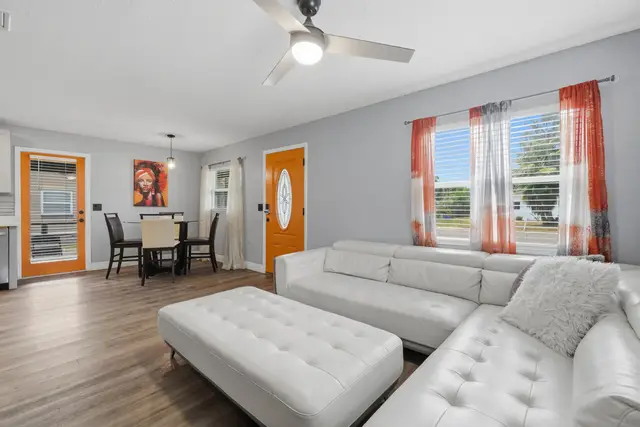
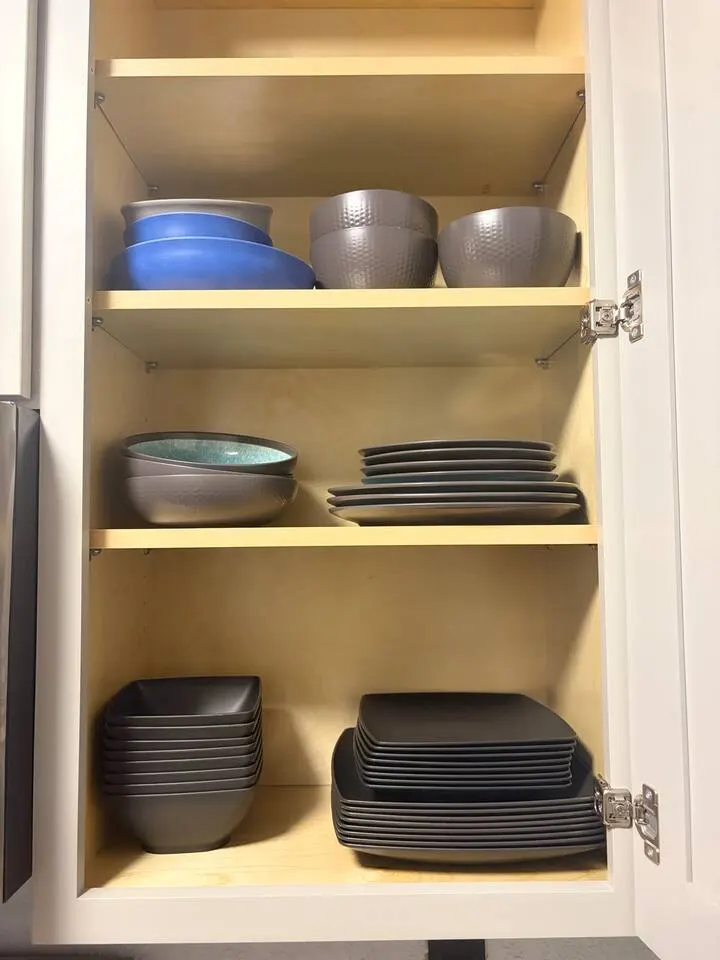
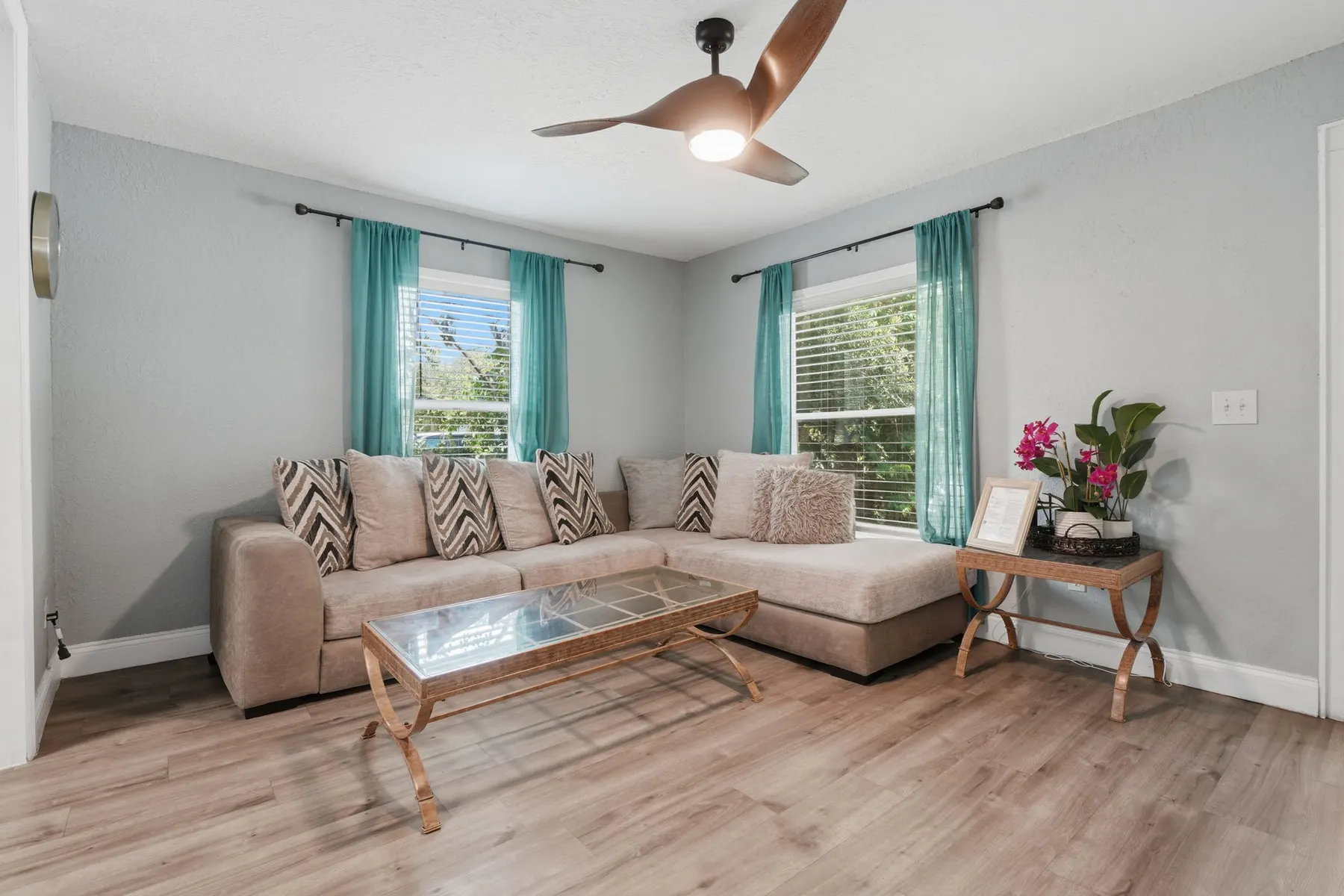
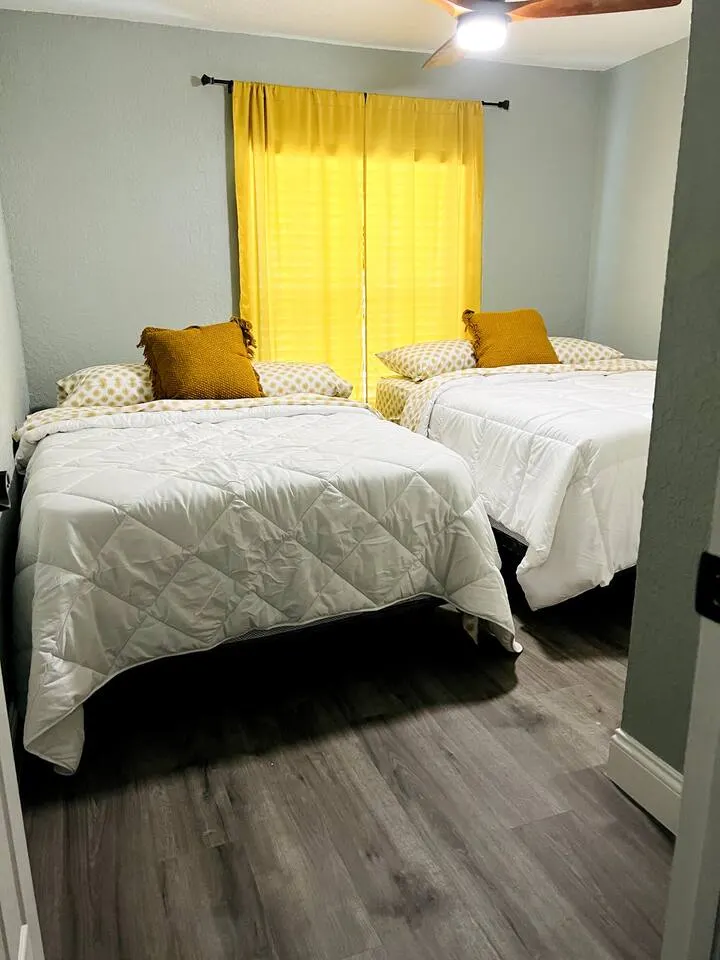
The point of Additional Living Expense coverage is to keep you at roughly the standard of living you had, not to make you buy a household twice. That is the piece a furnished house solves that an empty apartment does not. Furniture, made-up beds and linens, a stocked kitchen, a washer and dryer, Wi-Fi and private parking are already in place at every one of our thirteen homes before you arrive, and the exact list is confirmed in writing when you book.
Exact inclusions vary a little by home and are confirmed in writing when you book.
What that looks like varies a little by house. WinterPark Home's kitchen comes stocked with cookware, dishes and a coffee maker, so a family that has lost access to their own kitchen for a repair can start cooking the same day. The Clue House, Fruit Tree Home and Cozy Home each have full-size, in-unit laundry rather than a shared machine, which matters more than it sounds like it should when a household is already living out of suitcases. Bed and bath counts on every home page are the counts from that home's own listing, and a sofa is never counted as a bed, so what you read is what is actually there to sleep in.
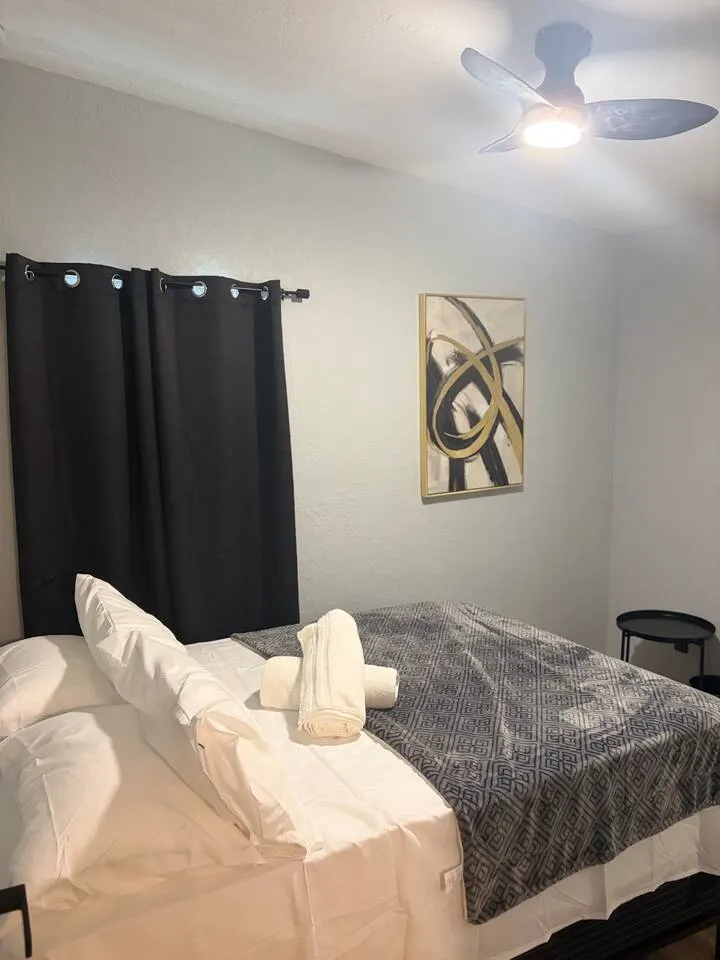
Comfort details vary by house too. Game Day Getaway-Downtown Orlando has blackout curtains in its furnished bedrooms, useful if someone needs to sleep during the day while the repair crew is still working at the original address. WinterPark Home has a screened porch with patio seating, a place to sit outside in the evening without fighting bugs while the kids wind down.
Putting the insurer on the agreement
Most of the paperwork an insurance displacement needs is the same paperwork any monthly guest gets: a written agreement naming the home, the dates, the rate and the deposit, plus itemized receipts each month. What is different about an insurance stay is who the paperwork can name. We can write the monthly agreement directly to your insurance company, your public adjuster, or a relocation coordinator handling the claim on your behalf, with you listed as the occupant and the invoice sent monthly in the paying party's name.
For an established insurer or claims-management company, we provide a W-9 and a certificate of insurance on request, since Libema carries a commercial landlord liability policy, and we can set up net-30 invoicing on a signed agreement or a purchase order once the first month is paid. That is the same arrangement we offer staffing agencies and corporate relocation teams, and an adjuster who has moved a policyholder into monthly housing before will usually recognize the format right away. The certificate confirms Libema carries its own liability coverage as the landlord, which is the kind of detail some claims files ask for before a housing vendor is approved.
None of that changes what you pay day to day. The monthly rate, the deposit and the pet policy are confirmed in writing when you inquire, since rates vary by home and by season and we do not publish them on the site. What changes is who the invoice is addressed to, and getting that right at the start saves a round of corrected paperwork later in the claim.
A yard for the kids and the pets
A homeowner's or renter's policy that covers your Additional Living Expense usually covers your pets too, and a fenced yard is worth asking for specifically if you have a dog or young kids who need somewhere to burn energy that isn't a parking lot. Several of our homes accept pets, and the policy and any deposit are confirmed in writing before you commit.
Among the homes we point families toward for a displacement stay, Amelia’s Arena Retreat, The Clue House, Piedmont, Game Day Getaway-Downtown Orlando, WinterPark Home and Fruit Tree Home all have a fenced yard. Entertainment Home, Downtown & Stadium Cozy Retreat and Cozy Home each have a yard as well, though it isn't fenced, and at Downtown & Stadium Cozy Retreat the backyard is currently being worked on, so for now it's for walking a pet rather than letting one run loose. We would rather tell you that up front than have it be a surprise on move-in day.
Staying close enough to meet the contractor
Part of managing a repair from a rental is still being able to get back to the house: to let the contractor in, to walk the adjuster through the damage again, to sign for a delivery. By road and without traffic, every one of our thirteen homes is between 6 and 17 minutes of downtown Orlando, a reasonable middle point if your own house sits anywhere in the city core or the neighborhoods around it.
If your own neighborhood is one we do not have a house inside, tell us and we will point you to the closest one we do have. College Park, for example, is one of Orlando's most established close-in neighborhoods, and we do not keep a home inside it, but Amelia’s Arena Retreat, WinterPark Home and The Clue House are all a short drive away and all three are set up for exactly this kind of stay. The same is true across the portfolio: our homes sit in Parramore, Holden Heights, Washington Shores, Pine Hills, Rosemont and Lockhart, and between them they cover most of the ground a repair in central or west Orlando is likely to be on. SR-408 and I-4 are the fastest routes into downtown from most of the cluster, and SR-408 is tolled, so a SunPass or E-PASS transponder is worth having if you are making that trip several times a week.
A normal week while the house gets fixed
Displacement is easier on kids and on adults when the week still has some shape to it: groceries, a park, somewhere to cook dinner. From Amelia’s Arena Retreat and Fruit Tree Home on the downtown edge, the Publix at The Paramount on Lake Eola serves the downtown side, and there is a second Publix on South Orange Avenue nearer Holden Heights. Lake Eola Park itself has a roughly one-mile walking loop, the swan boats, and a Sunday farmers market from 10 a.m. to 3 p.m., an easy way to get everyone out of the house for a couple of hours on a weekend.

From the Pine Hills homes, The Clue House, Entertainment Home, Downtown & Stadium Cozy Retreat and Cozy Home, Barnett Park on West Colonial Drive is the local option: 159 county-run acres with a free splash pad that runs through the warm months, playgrounds, walking trails and a recreation center. WinterPark Home in Lockhart has its own community park with a playground and courts a short walk from the front door. In Washington Shores, near Piedmont and Game Day Getaway-Downtown Orlando, Nikki's Place on South Orange Blossom Trail has served soul food since 1999, less than a mile from the stadium, and the Walmart Supercenter on West Princeton Street covers the bigger grocery run.
None of it replaces your own kitchen and your own neighborhood, but it is enough of a routine that a displacement stay does not feel like living out of a hotel room for however many weeks the repair takes.
How an extension actually works
Repair estimates move, especially in Florida after a widespread storm, and the housing arrangement needs to move with them without turning into a new negotiation each time. Our agreements are written monthly, and extending one is straightforward: tell us as soon as you know the timeline has shifted, whether that's because the contractor is waiting on a part or the adjuster reopened the estimate, and we extend the same written agreement for another month rather than starting the paperwork over.
That applies whether the extension is two weeks tacked onto a month or another season entirely. If your claim only calls for a short stay before the bigger repair starts, nightly and weekly bookings run through each home's own Airbnb or Vrbo listing, or you can ask us directly, and you can move onto a monthly agreement once the timeline is clearer. This is also useful if your adjuster wants a real local rate to compare against a hotel quote before approving a longer stay: a few nights on the public listing gives you both a number to work from. Either way, the paperwork stays the same shape: a written agreement, an itemized receipt each month, and a rate and deposit you already agreed to in writing before you moved in.
If you are still sorting out which of our homes fits your household and your claim, call us at (954) 793-1171 or email libemapropertiesllc@gmail.com; we typically answer the same day. You can also reach out through our contact page and tell us the neighborhood you are being moved out of.
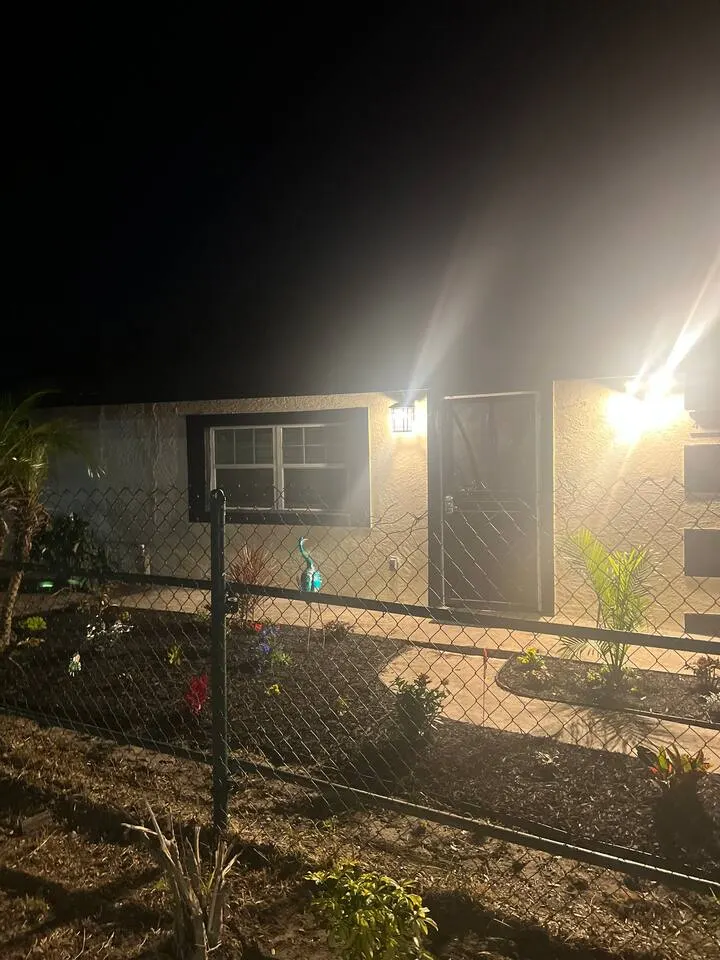
Monthly Furnished Rentals: What's Usually Included
A plain rundown of the furniture, kitchen, linens, utilities, and internet you can usually expect in a furnished monthly home, and the questions worth asking before you book.
Read →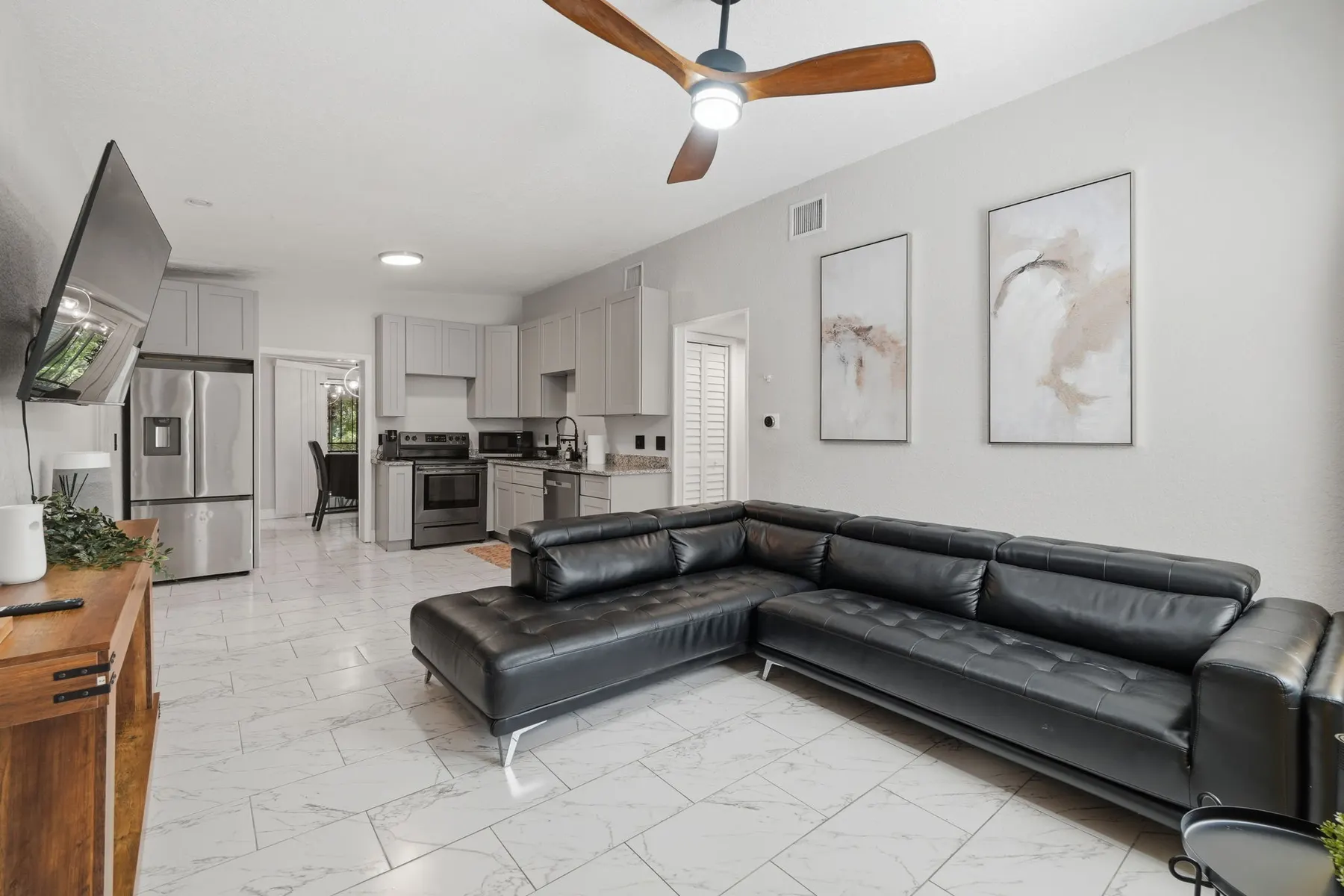
Which Libema Home Is Right for You
All thirteen homes matched to the stays people actually book: a solo nurse, a couple, a family of five, a crew, a reunion, a game weekend, a hospital assignment.
Read →